

Flashreport 10
ADVERTISING

The new show business
As younger consumers favor entertainment and reject traditional advertising, brands are moving further into original content. Consumer brands favor microseries that play out on social, while luxury brands increasingly plant their flag in Hollywood. Both create universes around the brand.
Microseries
As consumers spend more time on their phones, more brands are experimenting with 60-second formats designed for mobile viewing. Inspired by Chinese microdramas, this vertical content builds ongoing storylines across multiple episodes, usually 12, each with a strong hook. The genre combines awareness with entertainment, using cliffhangers to drive engagement. It also comes at a smaller price tag, with some series produced in under four weeks. High-budget productions would look inauthentic and go against the concept.
One brand successfully jumping on the trend is Crocs with “Charmed to Meet You”. Using Jibbitz charms as a central narrative device, the series drew nearly 10 million views and quickly spawned a sequel. “The Scene” from Marc Jacobs drew headlines earlier this year for its collaboration with actress, producer and screenwriter Rachel Sennott. More episodes have been signaled, though none has appeared yet. Closer to the soapiness of original microdramas is Maybelline’s “Maybe This Christmas”, part of its 2025 holiday campaign, using humor and hyperbole to push its Instant Eraser Concealer.
From social, for social
Social is central to the format, both as a media channel and source of insight. The format itself was born on Chinese short-form platforms Douyin, ByteDance’s platform for mainland China, and Kuaishou.
A recent example is “Heart on My Sleeve”, a 12-part microseries by Urban Outfitters’ clothing rental service Nuuly exploring the ups and downs of modern dating. Nuuly partnered with social agency Dayna’s House, which helped ensure the dating insights felt relatable to its Gen Z audience. Episodes run on TikTok, Instagram Reels and YouTube Shorts.
Brands go Hollywood
But microseries are just one expression of long-form storytelling’s comeback. Hollywood is another.
Major brands are hiring Hollywood and media veterans. Some have launched their own in-house studios, including P&G Studios, Starbucks Studios and Kraft Heinz’s The Kitchen. Small and midsize film and TV production companies are also leaning into branded entertainment.
Luxury brands are using film to build narrative universes that reinforce identity and cultural recall. European fashion houses have been planting their flags in entertainment for years. Kering acquired a stake in Creative Artists Agency, LVMH established 22 Montaigne Entertainment and Saint Laurent launched Saint Laurent Productions with creative director Anthony Vaccarello.
Blending it out
Brands are becoming entertainers as the line between advertising and original content blurs further. “Family Blend”, a Lavazza series directed by Francesca Scorsese and inspired by her TikTok account, features her and Martin Scorsese exploring New York while drinking coffee. Its five episodes, each two to three minutes long, show how brands can merge authenticity, entertainment, snackable content, product placement and Hollywood royalty. A fine example of branded entertainment shifting from interruption to invitation and the power of drawing viewers in voluntarily.
MOBILITY
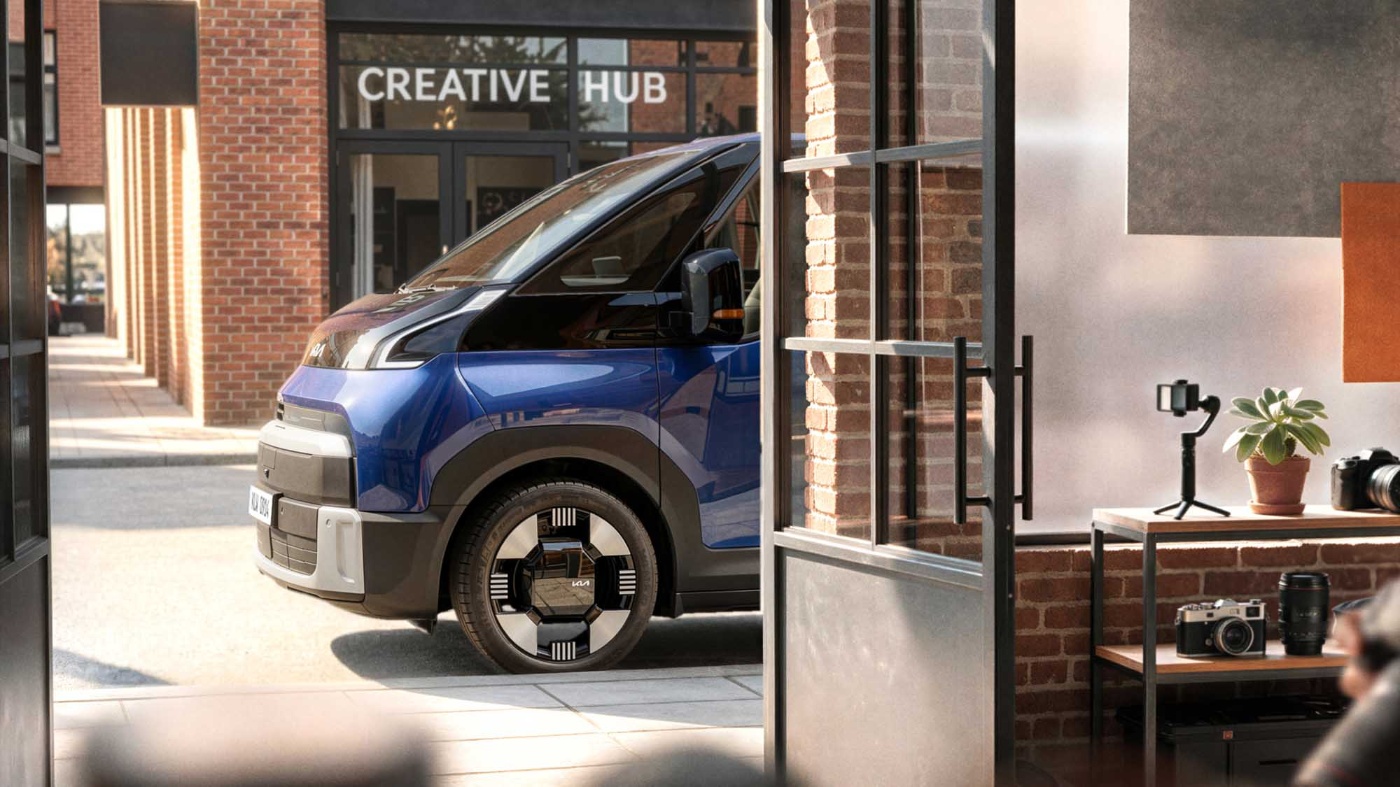
IAA Transportation
IAA Transportation, the leading trade show for commercial vehicles returned to Hanover last September. This time around, its real product was not the van, but the system.
The industry is moving beyond the vehicle
IAA Transportation made one shift unmistakable: the commercial-vehicle market is moving beyond the vehicle itself. Manufacturers are now competing through the ecosystem surrounding the vehicle, including software, connectivity, charging solutions, fleet management, conversion capabilities, energy services and automated logistics. Electrification remains important, but it is increasingly becoming a prerequisite rather than a differentiator.
European manufacturers are defining the new baseline
Among European OEMs, Renault offered one of the clearest examples of this transition. Its new Trafic E-Tech electric was positioned as a “Software-Defined Van,” combining a dedicated electric architecture with connected services and a structured conversion ecosystem.
Stellantis Pro One demonstrated a similarly holistic approach, bringing together multiple brands, conversion solutions, fleet-management technology and autonomous logistics concepts under a single umbrella. The message was clear: value increasingly comes from what happens around the vehicle, not just within it. Ford Pro focused on maximizing vehicle uptime through digital monitoring and maintenance services, while Volkswagen Commercial Vehicles showcased Connect Pro, integrating fleet monitoring, predictive maintenance and connected services through a single business platform. Taken together, these manufacturers are defining a new competitive baseline: electrification supported by software, services and conversion capabilities.
Chinese brands expand the model even further
Chinese manufacturers demonstrated how quickly this ecosystem approach can expand. BYD presented an integrated proposition spanning electric trucks, charging infrastructure, energy storage, energy management and financing solutions. Maxus showcased bidirectional charging applications, allowing vehicles to supply power to tools, buildings or the grid, alongside electric trucks and automated delivery concepts.
Their shared message was difficult to miss: the next competitive divide may not be between electric and combustion vehicles, but between manufacturers that sell vehicles and those that can integrate the digital, energy and service layers surrounding them.
Kia’s PBV strategy fits the direction of travel
Against this backdrop, Kia’s PV7 is best understood as part of this broader industry transformation. As Kia’s second PBV model, it is built on the dedicated E-GMP.S platform and designed for a wide range of mobility and business applications through flexible configurations and future conversion opportunities. Kia is clearly aligned with the industry's move from fixed vehicles to adaptable platforms.
With established LCV producers having a head start in terms of ecosystems and Chinese entrants showing that they can not only compete, but even take it a notch further, Kia will find need to find its place within this challenging environment.
From product to system
IAA Transportation 2026 suggested that future leadership will not be determined by range, payload or design alone. These attributes still matter, but they are increasingly becoming table stakes. The winners are likely to be the brands that combine them into connected, adaptable and increasingly self-sufficient mobility ecosystems. Kia is part of that transition, but it is not alone. If this year’s exhibition provided one takeaway, it is that the industry’s next leaders may be defined less by the vehicles they build and more by the systems they enable.
AI

The AI cost paradox
A technology sold on efficiency and cost savings is creating an entirely new and rapidly growing cost base.
AI came with a compelling promise: do more, faster and for less. But as companies move from experimentation to large-scale adoption, an uncomfortable paradox is emerging. AI may make individual tasks cheaper while pushing overall technology costs up, through licenses, infrastructure, integration and an ever-growing appetite for tokens.
The rise and fall of tokenmaxxing
Earlier this year, Silicon Valley embraced "tokenmaxxing": encouraging employees to consume as much AI as possible. At Meta, engineers reportedly competed for titles such as "Token Legend." Nvidia CEO Jensen Huang went further, saying he would be "deeply alarmed" if a $500,000 engineer consumed less than $250,000 worth of tokens.
Then the bills arrived. Uber burned through its entire 2026 AI budget in the first four months of the year as Claude Code spread across its engineering organization. Its COO later questioned whether higher token consumption was translating into proportionally more useful features for customers: "the link is not there yet, right?".
In one case, AI spending had tripled to more than $15 million a month. Leaked discussions at Accenture found one source of soaring token consumption was not groundbreaking AI innovation, but employees using the technology to turn PDFs into PowerPoint presentations.
Now, we tokenminimize
Companies are now discovering that maximizing AI use and maximizing value are not necessarily the same thing. Adobe, Amazon and Atlassian are among companies reported to be restricting usage or encouraging employees to use less powerful models to control costs. Developers have even started experimenting with a "caveman" plugin that forces AI tools to produce deliberately terse responses to reduce token consumption. The "You're absolutely right to point that out." is now seen as a waste of precious tokens.
The topic is especially relevant for agencies. During the last Monks’ quarterly earnings call, Martin Sorrel signalled token costs as an area for stricter spending policy, acknowledging the agency had “probably been ill-disciplined on that”. Some agencies are already establishing token caps based on employees, teams and task priority.
Saving to spend
Perhaps the neatest illustration comes from SAP. The software giant had suspended most hiring and business travel partly as it grappled with AI costs. The exceptions? AI-related hires and AI-related travel. AI was supposed to help companies find efficiencies. Now, in some cases, companies are finding efficiencies elsewhere to pay for AI. Think of big tech cutting on marketing costs.
The AI costs do not stop at tokens. Poor AI output tends to shift work rather than eliminate it, leaving it to colleagues to decipher, correct or redo. The phenomenon, now widely known as “workslop”, and the additional labor it creates are now seen as a hidden tax on AI adoption.
An old-fashion question
The AI boom is far from over. But the metric is shifting from how much AI employees use to what businesses actually get from it. Google Cloud reported in July that search interest in “token efficiency” had been four times higher than interest in “tokenmaxxing” since January 2026.
After racing to get employees to use more AI, businesses are approaching AI spend with a much more old-fashioned question: do the benefits justify the costs?
HMG

Hank is back
Hankook, the South Korean tire brand, continues to challenge the category by bringing humor and a refreshingly honest approach to its communications.
Quircky and charming
We first met Hank around this time last year, when the retired mechanic showed us his new hobbies from his garage. This time, retirement takes him to the countryside.
Since starting its collaboration with INNOCEAN last year, Hankook has taken a refreshingly honest and grounded approach to communication, starting from one simple truth: most people don’t care much about tires. The answer was “Live your life. Leave tires to us,” a platform built around Hank, a quirky retired mechanic who loves talking about tires while discovering the joys of retirement. Hank has proven to be a very strong creative platform because it allows us to talk about tires and their features in unique ways," said Gabriel Mattar, European Chief Creative Officer at INNOCEAN.
With his easy-going manner and enduring soft spot for tires, Hank makes complex tire topics more accessible and entertaining, reinforcing one of Hankook's most important brand pillars: trust.
Building on last year's success
The campaign's social-first format also makes a statement. In a sector where many brands are still taking their first steps into social-native content, Hankook is confidently creating campaigns made specifically for social media.
“From the first day we started working with INNOCEAN, it was very clear to us that we didn’t want to do what other brands were doing when it comes to tire communication." said Lars Heberer, Creative Lead EU at Hankook Tire. INNOCEAN won the European Hankook account in September 2024 following a pitch.
The campaign generated more than 200 million impressions across Europe.
The new campaign
Titled “Hank Retired in the Wild,” the new campaign consists of six films following Hank on different adventures. In each, he tackles a complex or technical tire topic in his own entertaining way.
The first film, “Aquaplaning,” broke in mid-September across Instagram and Facebook in 14 markets, with local-language content adapted for each region. The campaign includes five longer films and a teaser, alongside short montages, stories, behind-the-scenes clips and stills.
“We built the campaign as an episodic content system, with every piece planned and produced for the way audiences actually experience social,” said Steffen Pferr, Social Media Business Director at INNOCEAN. The films were created with production company Studio Gloria and directed by Arabella Bartsch.
Upcoming episodes include Bird Watching, Bear Prints, Guitar by the Campfire and Marshmallow. Stay tuned.
Monthly Picks

[INNOCEAN HQ] September Monthly Picks
The Insight Strategy Division at INNOCEAN HQ is excited to share the September edition of Monthly Picks. This publication explores three impactful social trends and provides valuable marketing insights:
Marketing Trend
Solo Life 2.0: Solitude as an Aspirational Lifestyle Choice
Space EX
Seoul: Where Global Brands Are Reimagined
Rising icon
The New White Space: Oral Care Moves Beyond Daily Essentials to Become a Lifestyle Choice