

March 2026
Flashreport 03
Advertising
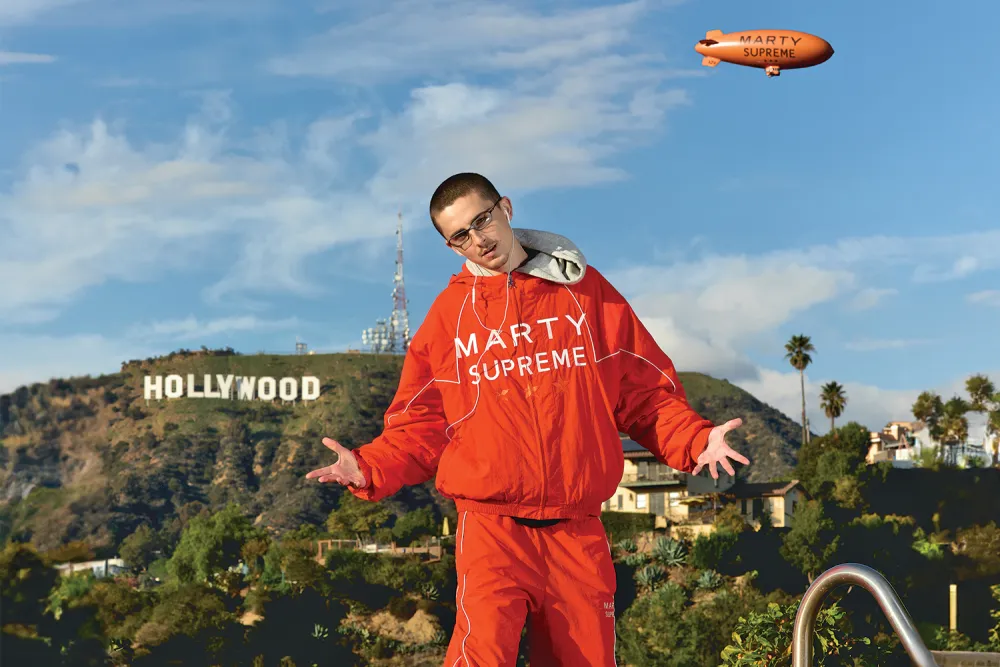
Marty Supreme turns promotion into performance
The release campaign for Marty Supreme, which aired in German cinemas in March, offered a masterclass in viral marketing. Using Gen Z language with unusual fluency, it turned an indie film about table tennis into a cultural event, with a crescendo of calculated chaos as the film release approached.
Lead actor Timothée Chalamet launched an unprecedented promotional crusade, selling the film with an intensity that often felt excessive, chaotic, even deliberately uncomfortable, inviting comparisons between his promotion style and the film’s obsessive main character.
GEN Z ENTERTAINMENT
The campaign was a chaotic performance unfolding over three months, spilling across media, streets, and social platforms. It tore up the traditional Hollywood promotion playbook, playing with confusion and overexposure in an intentional Gen Z gamble.
This controlled chaos included $250 jackets reselling for $6,000, orange blimps, a rap video as a response to online rumors, a CCXP Brazil panel—complete with a green-and-yellow Marty Supreme jacket—a Tonight Show appearance, and a table‑tennis tournament in partnership with Airbnb. At its peak, the campaign logged 128 appearances in 96 hours, leaving many exhausted.
The campaign’s standout moment was a viral fake Zoom meeting in which Chalamet presented his increasingly outlandish marketing ideas to a visibly puzzled group of producers and social experts. “I have an audience, so I engage with them, and I give it 150%,” Chalamet said. That 150% included yelling from atop the Las Vegas Sphere, turned rusty orange.
PROMOTION SLIPS INTO CHARACTER
As if taken over by lead character Marty Mauser, Chalamet chose exposure over elegance, embracing ridicule as the cost of staying visible. The boundary between promotion and reality dissolved and every appearance became an extension of Marty’s world.
This wasn’t Chalamet’s first brush with guerrilla-style publicity. During the rollout of the Bob Dylan biopic A Complete Unknown, he famously crashed his own look‑alike contest in Manhattan.
“Timothée Chalamet is a generational talent—not only as an actor, but in his grasp of the attention economy and social media,” said an executive who has worked with him.
WAS THE FANFARE WORTH IT
The campaign generated 61 million engagements across social, digital, and traditional media - brilliant, exhausting, and impossible to ignore. But was it effective?
The film grossed close to $180 million worldwide on a $60–70 million budget, reaching profitability even before streaming. Compared with other high‑profile releases last year, it performs remarkably well.
At a time when the industry is weighed down by remakes, franchises, the erosion of movie stardom, and the dominance of streaming, Marty Supreme makes one thing clear: what happens after post‑production now matters more than ever.
Mobility
Surging oil prices spark fresh interest in EVs.
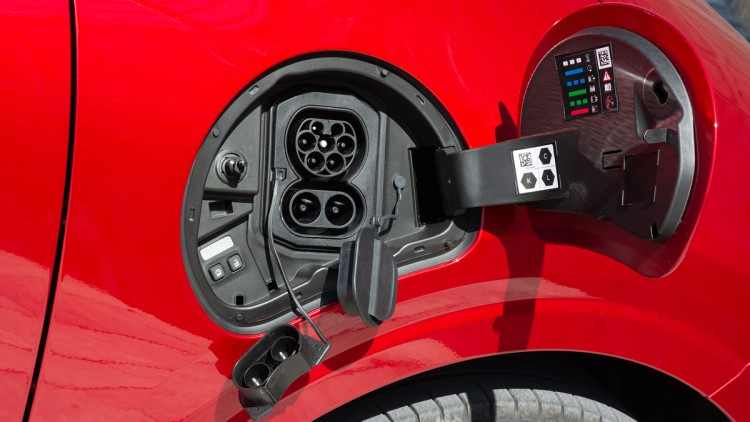
The war in Iran has disrupted a vital shipping route carrying roughly 20% of global oil supplies, pushing oil prices up by more than 50%. The shock has sparked renewed interest in EVs, felt across markets worldwide. It comes at a moment when several auto giants have been pivoting back toward combustion engines.
In Germany, EV registrations rose sharply in March, reaching nearly 71,000 units — up 66% year on year and the second‑highest monthly total since August 2023. EVs accounted for 24% of registrations during the month, with analysts calling a 25% share for the full year a realistic scenario. A year earlier, the share stood at 16.8%. A new subsidy of up to €6,000 for households earning up to €80,000 a year is also playing a role.
Hyundai recorded a 30% increase in total new registrations and Kia 33% year on year in March. Looking at BEVs alone, registrations rose 17% for Hyundai and 79% for Kia, compared with a market‑wide BEV growth rate of 62%.
STRONG USED‑EV ENQUIRIES
Used EV sales tend to react quickly to shifts in sentiment or sharp moves in petrol prices. They are up to 40% cheaper than new models and readily available, unlike new cars that often come with long delivery times. Price volatility is coinciding with a broader used‑EV landscape in Europe. A wider model range and the growing use of battery‑health certificates have eased concerns around second‑hand EVs, supporting demand even before the war began.
In Germany, mobile.de said the share of EV searches on its platform has tripled, rising to 36% from 12% by early March. Dealers have received 66% more enquiries for used EVs than in February. Other European markets reported comparable steep rises in enquiries, including France (50%), Romania (40%), Portugal (54%) and Poland (39%), according to data from OLX. “As soon as petrol passes 2 euros per litre, it leaves a lasting impression,” said Romain Boscher, CEO of French used‑car retailer Aramisauto. “We are seeing a sharp rise in interest on the website, translating into orders for EVs and hybrids.”
A SIMILAR TREND IN THE US
In the United States, Autotrader reported a 28% jump in enquiries about new EVs and a 15% rise for used models on March 26. Octopus Electric Vehicles said leasing enquiries had climbed 36% since the conflict began.
Only weeks earlier, the US EV market looked largely stalled. Now, for lower‑income buyers — who are most exposed to fuel costs — used EVs are becoming more appealing. “You can get a fairly decent used EV for under $25,000. We are now in an era of desirable, inexpensive EVs.”
CAUTION REMAINS
The conflict’s uncertainty is pushing some consumers to seek stability, with EVs offering a sense of energy independence — particularly for high‑mileage drivers and lower‑income households, for whom fuel costs weigh more heavily. Some automakers are already leaning into the message. In France, MG is running social‑media ads declaring: “It may be time to rethink the way you drive.”
Steffen Michulski, a senior consultant at JATO Dynamics, said that while the situation is still unfolding, the fallout from the Iran war is already influencing EV demand. But he also warned against oversimplification, noting that prolonged economic pressure would affect all powertrains, electric and combustion alike. Other analysts also urge restraint: past crises show that behaviour shifts often fade once markets stabilize.
Combined with geopolitical uncertainty, the fast and global response hints at a development worth watching.
AI
What Sora’s death reveals about AI in video production
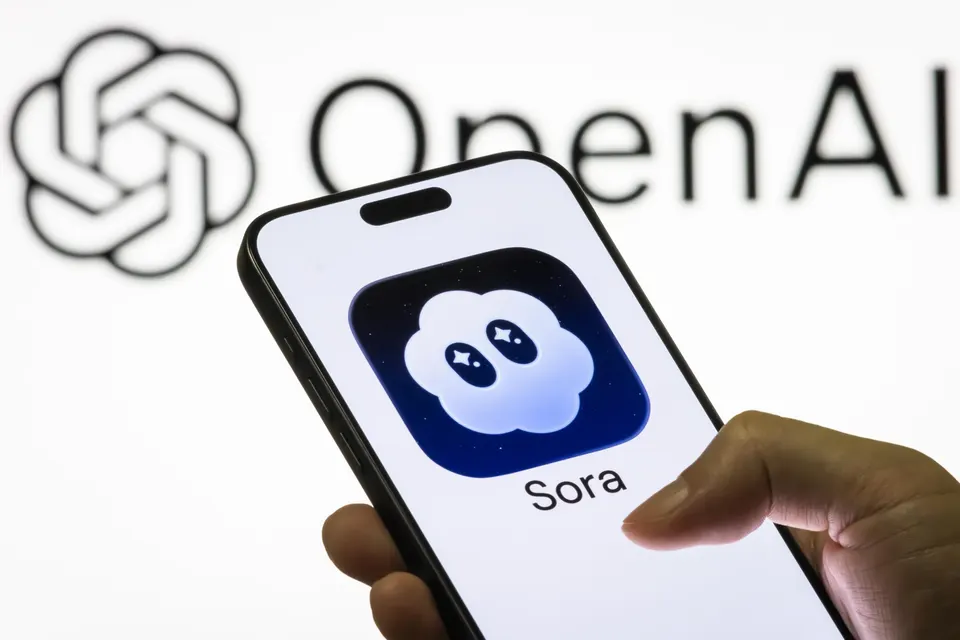
Only six months after the release of Sora2 last September, OpenAI shut down its short‑form video app with a blunt “We’re saying goodbye to Sora” post on X. Its debut marked a turning point for AI‑generated video, shifting it from goofy slop to sophisticated deepfakes—for better or worse. Now, the start‑up once seen as the uncontested leader of the AI race is recalibrating, under pressure from rivals such as Anthropic and Google. As it prepares for its own IPO, OpenAI aims to concentrate on higher‑productivity use cases, including enterprise solutions and robotics.
The decision is rooted in economics and reflects a misread of how AI is actually used in professional and commercial settings—softening early fears that AI would wipe out entire creative industries. When OpenAI released Sora in 2024, the entertainment sector was rattled. Concerns quickly grew that high‑quality, text‑to‑video generation could displace human creators. What emerged instead is a very different picture of AI’s role in professional content production.
As with most OpenAI launches, Sora arrived loudly. It was praised for its leap forward in physical realism—essentially, deepfake video. That progress also triggered a flood of concern, as disturbing hyper‑realistic AI slop spread rapidly. OpenAI stressed the presence of guardrails, but their effectiveness was soon discredited when a deepfake of Sam Altman shoplifting GPUs went viral.
A MISREAD OF THE AUDIENCE
The app hit one million downloads in under five days. The momentum didn’t last. By November, downloads were down 70% and monthly users had fallen by 34%. The numbers point to the core issue: Sora failed to build a genuinely engaged audience, which skewed heavily toward individuals. And AI video, as it turns out, drains much of the pleasure from scrolling. Even Disney-style content on Sora, after a collaboration and USD 1 bn investment announcement (now off), struggled to resonate.
More importantly, Sora’s hyper‑realistic output missed the mark for professional creators and agencies. What they need is consistent quality, controllability, and dependable results—non‑negotiables for commercial work. According to AdWeek, much of the creative industry had already moved on from Sora long before the shutdown. For many, the shift wasn’t about rejecting AI video altogether, but about redefining where it actually adds value—less in raw generation, more in supporting the wider production process.
“The truth is, we had already moved on to other tools that better fit the way our creative teams work,” said Tim McCraken, SVP Creative and AI at BarkleyOKRP. While Sora showed “huge promise,” he noted, it didn’t align with the agency’s workflows. “We experimented with it and kept watching how it evolved, but consistently found ourselves gravitating toward tools that better matched how ideas actually get developed, refined, and moved through the agency.”
IMPOSSIBLE ECONOMICS
OpenAI also appears to have underestimated the cost of running Sora. The first public warning came in late October, when Sora head Bill Peeples wrote on X that “the economics” were “currently completely unsustainable.” AI video carries costs that text products simply don’t. Compute demands are heavier. Storage is expensive. Moderation is far more complex, and the potential for misuse is significantly higher than with text or code. Each layer adds friction, cost, or both.
In November, Forbes estimated Sora was costing OpenAI—still burning cash faster than it brings it in—around USD 15 million per day. If that estimate holds, shutting the product down rather than letting it quietly fade makes sense, especially in a pre‑IPO context.
IPO OVER AGI
Cutting losses and redirecting energy—and compute—ahead of an IPO now appears to outweigh Sam Altman’s earlier fixation on achieving AGI. Video had been seen as a key component of that ambition, given the need to understand the physical world, not just language. Meanwhile, many AGI contenders remain active in TikTok‑style short‑video markets, including Meta’s Vibes, Google’s Veo3, ByteDance’s SeedDance, and Alibaba’s Happy Horse, launched just last week.
Kathleen Barrett, former SVP at Vimeo and now CEO of Backlight, sees the shift in a positive light: “This deprioritization is a sign that studios and companies are moving toward operationalizing workflow AI to support human work—which leaves more space for original creative output.”
Hyundai Motor Group

Born inside a brand: Innocean USA makes Ad Age’s Top 10
Ad Age’s A‑List ranks the most outstanding marketing firms in the US — a market that accounts for 35.3% of global ad spending — based on creative excellence, business performance and industry influence.
INNOCEAN was named to the Top 10 for the first time, ranking #8 and becoming the first Korean agency to do so. Other agencies on the list include Rethink (#1), Wieden+Kennedy (#6) and Goodby Silverstein & Partners (#9). The distinction follows a strong 2025, with INNOCEAN USA posting USD 460 million in revenue, up 7.7% year‑on‑year, and ranking second among advertising agencies in Southern California.
In a feature titled How INNOCEAN Became More Than Just an Auto Agency, Ad Age traces the agency’s DNA, its evolution beyond automotive, and the advantages of being part of the Hyundai Motor Group family.“Every client we bring in now is an important one, because it helps to contribute to that story,” said Jason Sperling, INNOCEAN USA’s Chief Creative Officer, reflecting on the agency’s shift away from the perception of being an auto‑only shop.
Automotive, said Leslie Barrett — former BMW account lead at Goodby and INNOCEAN USA’s first‑ever President — is “a very complicated category. So, if you can handle that, you can handle most things.”
Sperling also pointed to the agency’s close relationship with Hyundai and Kia, which allows it to “work on the totality of a piece of business, so that you’re not just being spoon‑fed a project.” Internally, the agency often describes itself as having been “born inside a brand.”
Beyond Hyundai, Kia and Genesis, INNOCEAN USA has won several non‑automotive accounts, including El Pollo Loco, NEFT Vodka and Delta Faucet Co. Last year, the agency led El Pollo Loco’s rebrand, introducing a new visual identity and the tagline “Let’s Get Loco,” designed to reinforce the chain’s focus on fire‑grilled chicken. The work was grounded in audience insights that helped define a brand space the company could clearly own. Later in the year, INNOCEAN brought El Pollo Loco into the AI conversation with the #LocoAI Challenge, a social‑led contest that generated 382 original AI creations and 4.9 million organic views.
The agency also applied AI to a broader social challenge with Refacing the Future, addressing how generative AI misrepresents diverse communities. Working with Pockstock, 22 agencies and 16 photographers across 65 countries, the project produced 1.8 million images and 50 million annotated labels. The dataset now helps train AI models used by Adobe, Google, Microsoft, Amazon and OpenAI.
Alongside standout work for Hyundai, Kia and Genesis, the piece highlights how INNOCEAN supports nearly all of Hyundai’s marketing efforts, including the data and insights platform that drives strategy across channels. Reflecting on the agency’s expansion beyond automotive, Hyundai Motor America CMO Sean Gilpin said: “New categories and new challenges push agencies to sharpen their thinking and bring fresh insights back.”
Monthly Picks
![[INNOCEAN HQ] March Monthly Picks](https://innocean.eu/wp-content/uploads/2026/04/Monthly-Picks-March.png)
[INNOCEAN HQ] March Monthly Picks
The Insight Strategy Division at INNOCEAN HQ is excited to share February edition of Monthly Picks. This publication explores three impactful social trends and provides valuable marketing insights.
- Marketing Trend: Active recovery as a daily routine
- Space EX: Seoul's landmark spaces turn into K-POP stages
- Rising icon: The rise of alternative coffee brands