

February 2026
Flashreport 02
Advertising
To ad or not to ad. LLMs try diverging approaches.
OpenAI has begun running ad formats inside ChatGPT answers. The ads, clearly marked as sponsored and placed beneath the organic results, still lack the more advanced measurement tools common on other digital platforms. OpenAI has been asking advertisers for $60 CPMs — a steep price — and requiring minimum commitments of $200,000. This hasn’t stopped advertiser interest. Adobe, Audemars Piguet, Audible, Ford, Mazda and Mrs. Meyers are among the brands buying access to ChatGPT’s more than 800 million weekly users.
“LLMs are the next media frontier,” said Will Swayne, Dentsu’s global practice president, media and integrated solutions. Not everyone agrees.
PERPLEXITY PHASES OUT ADS
Just days later, Perplexity, which first introduced ads in 2024, announced that it has been phasing them out since late last year. Its approach — sponsored answers placed below chatbot results — resembled OpenAI’s. Executives told the Financial Times that ads are “misaligned with what the users want,” underscoring trust as the main concern.
The concern is not new. Even Sam Altman said back in 2024 that mixing ads with AI felt “sort of unsettling” and should be a “last resort.” Yet with double‑digit‑billion losses projected to continue, OpenAI is desperate for ways to monetize its business model.
ANTHROPIC‘S SUPERBOWL NO-AD PROMISE
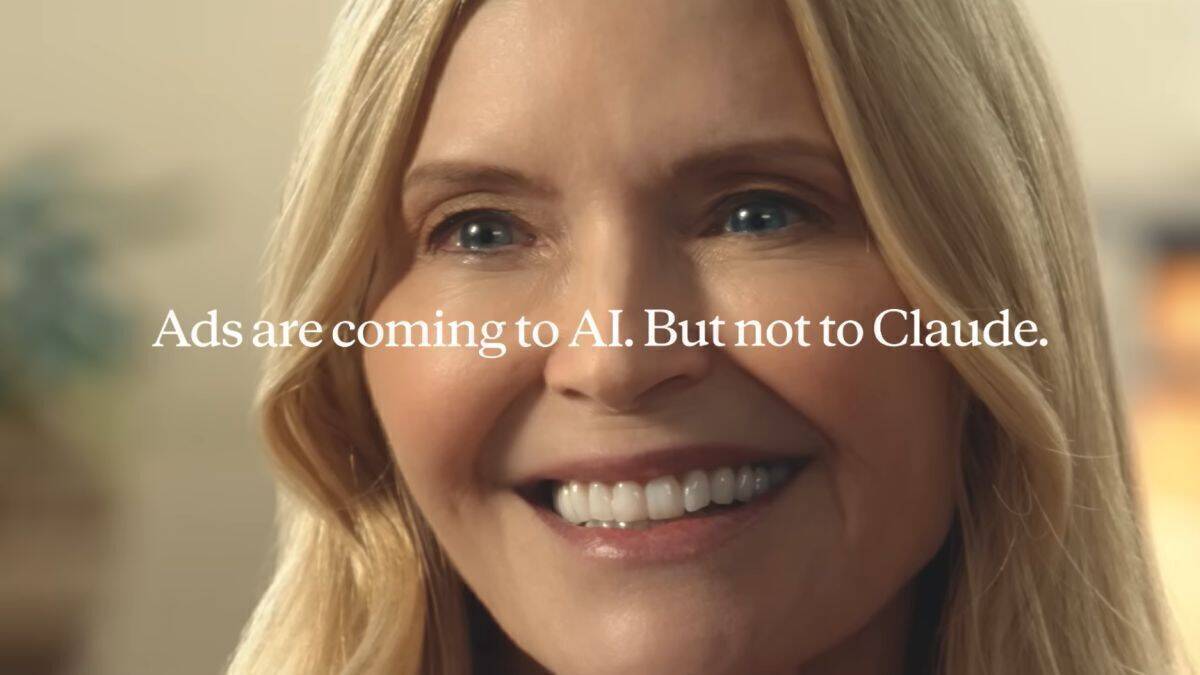
Anthropic seized the moment with a direct attack on OpenAI in its Super Bowl debut: three spots by Mother centered on the trust issue. Each ad shows a typical question about health, relationships or work suddenly derailed by a sponsored answer from a fictional ad‑driven chatbot. The message: “There’s a time and a place for advertising. Your conversations with AI shouldn’t be one of them.”
Altman’s virulent response only amplified the campaign. Every headline about his comments helped reinforce Anthropic’s ad‑free stance — a media win during the most expensive advertising week of the year.
THE RE-TARGETTING APPROACH
Other companies are looking for ways to tap on LLMs growing usage. Evertune, a generative engine optimization firm, has expanded its Partner Connect offering to bring retargeting into the LLM world. The idea is simple: serve ads on the websites users visit right after leaving an answer‑engine session. This lets marketers reach people at the moment they exit the chatbot, presumably motivated to take some action now armed with new information. By catching users immediately as they leave these conversational walled gardens, brands can reinforce positive messages, counter negative ones, or introduce themselves if the chatbot didn’t surface them at all.
In the end, the diverging approaches reveal a deeper tension running through the AI industry: the need to fund unprecedented compute costs without breaking user’s trust. Right now, OpenAI, Perplexity and Anthropic are each betting on a different path. OpenAI and Perplexity already changed their stances. Time will tell whether Anthropic’s promise is one they can keep.
BX
Brands seize the moment at Milano Cortina
The Milano Cortina Winter Olympics turned the exclusive Alpine resort and the fashion capital into a global stage where, for two weeks, athletes and brands alike delivered their strongest performances to an engaged local and international audience. Throughout the Games, sponsors opened brand houses, installations and multi‑day environments, creating direct, real‑time dialogue with the communities surrounding the event. “A city-based branded space is programmable” says Valerie Middleton, EVP and head of sport & strategic partnerships at M+C Saatchi Sport & Entertainment NA. “You decide who enters, what happens inside and how success is defined.”
BRANDED TRAIN THROUGH THE ALPS
Team USA sponsor Nike used the moment to reintroduce its ACG (All Conditions Gear) outdoor brand via the All Conditions Express — an orange, repurposed branded train leaving Milan and serving as a basecamp for passengers and elite athletes. Outfitted with updated technology and all the comforts needed to survive in the wild, it set the tone for the brand’s presence. Days later, Nike chose Milan to unveil the ACG Air Milano Jacket, an inflatable, air‑filled jacket inspired by the Air sneaker technology. Developed for the US team, it was presented in an installation housed in a series of railway arches in the city.
GASTRONOMIC EXPERIENCE MERGING SPORTS AND FASHION
Official Partner Salomon hosted an immersive experience under the theme Shaping New Futures. The dinner at BASE Milano welcomed 300 journalists, creators and brand friends just hours before the Opening Ceremony. Sensory storytelling shaped the evening: suspended florals frozen in ice, a refined Italian menu and a curated display of running and performance gear shared the space with the official Salomon‑branded uniforms worn by volunteers and torch bearers. For the occasion, For the event, Salomon partnered with the studio We are Ona, known for culinary experiences that converge gastronomy, art and design.
A CORTINA BRAND HOUSE FOR THE FEW
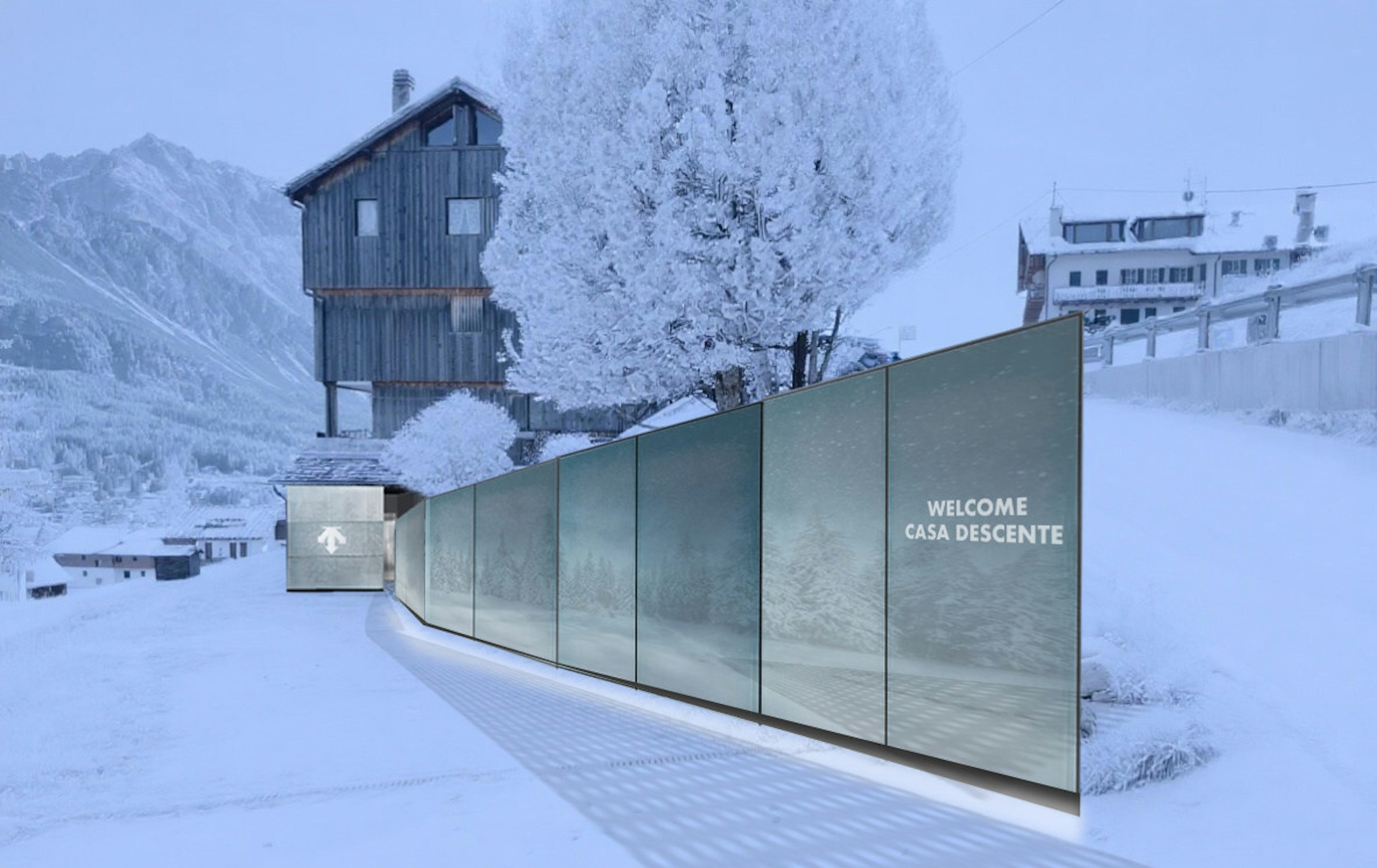
Japanese high‑performance winter apparel brand Descente chose to open a brand house — Casa Descente — directly in Cortina. Operating as a hospitality venue throughout the Games, it spotlighted the brand’s alpine performance and winter‑sport heritage. Brand houses, an increasingly popular format, reflect how sponsors now extract value from major events. “A brand house allows a sponsor to host priority stakeholders, capture first‑party data, test product, create owned IP and generate content that extends far beyond the Games window,” notes Middleton. Descente’s choice to host athletes, retail partners and invited guests reinforced this approach, focusing on deepening relationships within its existing community rather than chasing broader reach.
RETAIL OVERLOOKING THE DOLOMITES
Luxury brands have been rushing to open or refresh boutiques in the Alpine resort, home to just over 5,000 permanent residents. Moncler (sponsor of the Brazilian Alpine Ski team), Prada and Loro Piana opened stores along Cortina’s Corso Italia, while Dior, Louis Vuitton and Swatch renovated their retail spaces ahead of the event. “Luxury is increasingly treating the Olympics as a cultural mega‑platform where savoir‑faire can be staged on a global scale, especially when the host city aligns with brand heritage,” says Noemie Voyer, fashion expert at Luxurynsight.
Other celebrated activations included Omega’s House Milano, Samsung House, Casa Corona, Casa Airbnb, Lilly’s The Impossible Gym and Delta’s Winter Olympic Campaign. But being present at a cultural moment isn’t always about physical proximity. To mark the start of the Games, The Skating Club of New York hosted a celebration at The Rink at Rockefeller Center — a different cinematic winter backdrop, 6,600 km away from the Dolomites.
Mobility
Brand loyalty: Electrification as a structural reset
The growing penetration of battery electric vehicles (BEVs) is shaking the foundations of automotive brand loyalty. For decades, internal combustion engine (ICE) buyers have shown strong attachment to specific brands and body types, often repurchasing within the same brand and segment. However, the latest research confirms that electrification is disrupting these established patterns.
A SILENT LOYALTY RESET
The drivetrain shift is functioning as a genuine decision reset, prompting buyers to reassess their options rather than defaulting to prior loyalties. A study by LexisNexis supports this finding, reporting that ICE consumers show a 64% brand defection rate when switching to alternative fuel platforms. These findings are confirmed by Deloitte's 2025 Global Automotive Consumer Study—drawing on more than 31,000 consumers across 30 countries: U.S. consumers increasingly plan to switch brands for their next vehicle, 56% of respondents vs. 51% the prior year.
ACROSS REGIONS AND SEGMENTS
According to BCG Automotive & Mobility Barometer, covering more than 9,000 consumers across 10 countries, brand loyalty offers only limited protection against competition—with loyalty rates below 15% in China and between 35–40% in the U.S. and Europe. The report concluded that OEMs can no longer rely on brand alone as a shield against new entrants. S&P data from the first half of 2025 echoes this: conquest activity rose 7.6% among mainstream brands and 6.2% among luxury brands year-over-year, as households returned to market open to cross-shopping in ways not seen since before the pandemic. In China, two-thirds of EV buyers report a likelihood of switching brands, with similar patterns emerging in Europe and North America—particularly in the premium segment. And while 71% of current BEV owners intend to repurchase electric, even within the EV segment, fuel-type loyalty is fragmenting: LexisNexis data shows EV brand loyalty edged down from 76% in 2024 to 73% in 2025 as Tesla's dominance softened.
CONSUMERS HAVE THEIR REASONS
The trend is driven primarily by consumers prioritising technical performance, battery range, total cost of ownership, ease of charging, and in-vehicle technology. These criteria are inherently more comparable across manufacturers than legacy attributes like engine heritage or long-standing reputation, amplifying cross-shopping. Even among those who already switched and intend to repurchase electric, the fast pace of development is a motivation to explore a growing field of electric alternatives.
THE OPPORTUNITY
Electrification represents a structural reset in consumer behaviour—one that challenges traditional brand-building models and creates conquest opportunities and retention risks in equal measure. And one where communication plays a key role. Digital engagement is emerging as a new axis of retention as the software-driven vehicles (SDV) trend gains momentum. A Deloitte's 2026 study—surveying over 28,500 consumers across 27 countries—adds a forward-looking dimension, finds that many consumers would extend vehicle ownership by one to three years with regular over-the-air software updates.
This reset reflects a rational consumer response in an industry in the midst of technological disruption. It does not mark the end of brand loyalty, but rather the shedding of legacy loyalty patterns — making way for new ones that are better aligned with emerging consumer needs.
AI
Creative Agent: Amazon's end-to-end AI ad tool
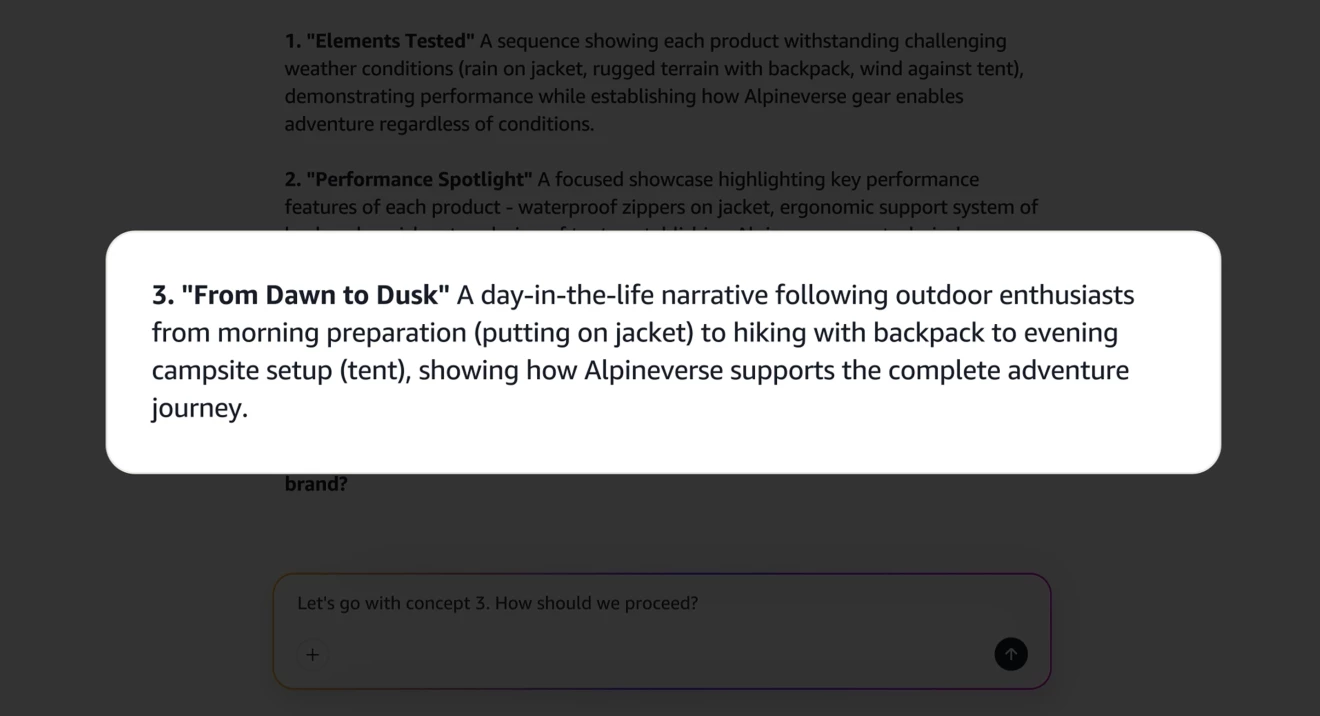
Amazon launched its agentic AI tool, Creative Agent, in Germany. The tool supports the full creative process — from ideation and scriptwriting to images, video, animation, voiceovers, music, and final ad delivery. The entire workflow takes a few hours and is free of charge. No special training or design expertise is required. There is also no minimum ad spend is required — at least for now. A final ad might look like this.
Bringing AI agents into ad asset production marks another step in how much day‑to‑day advertising work Amazon expects marketers to hand over to its systems. The rise in automation is being watched closely by agencies and marketers as major platforms promise to expand agents’ media planning and buying capabilities.
The launch press release highlights how the product is particularly attractive for small and medium‑sized companies for whom Amazon sales are significant. Yet it also features a quote from Nestlé Health Science — hardly a small player. In fact, Amazon identifies a third user group beyond SMEs: large corporations looking to promote not only their core products but full portfolios, and to adapt campaigns more flexibly around peak periods.
HOW IT WORKS
Within Creative Studio, advertisers can click “chat” to access a conversational, AI‑powered creative partner that conducts product and audience research, brainstorms ideas, develops concepts in storyboard format, and produces finished video and display ads. The tool presents several options for concepts and taglines, explaining how each was developed, what the visuals will look like, and what the message communicates to shoppers.
Retailers can choose one of the three proposed taglines and ad concepts that best match their brand voice or ask the tool to start again and generate entirely new options. Once a concept is selected, the tool creates storyboards with scene‑level scripts and visuals that can be edited and refined. It explains each step so advertisers can adjust even minor details. To finalize the process, Creative Agent produces multi‑scene videos and display ads complete with animation, music, and voiceovers, ready to run across Sponsored Brands, Sponsored Display, Amazon DSP, Streaming TV, and Brand Stores.
Creative Agent is powered by Amazon’s retail insights, giving it a detailed understanding of a brand, its products, and the features that set them apart.
FIRST U.S. METRICS
The tool is now available in Europe, launching in Germany, the UK, France, Spain, and Italy. The U.S. rollout took place last September. Early figures from U.S. customers are strong: AI‑generated images delivered an average 10% higher return on ad spend compared with campaigns without them. Advertisers using AI‑generated videos saw an average 12% sales lift within one month.
PART OF A LARGER AUTOMATION EFFORT
Last November, Amazon introduced an Ads Agent within its Amazon Campaign Manager, merging its ads console and demand‑side platform into a single AI‑driven hub. The Ads Agent was Amazon’s first agentic media planning tool and is embedded as a chat interface inside the platform. Media buyers can interact with it through natural language prompts.
Monthly Picks
![[INNOCEAN HQ] February Monthly Picks](https://innocean.eu/wp-content/uploads/2026/03/Feb_Monthly-Picks-scaled.jpg)
[INNOCEAN HQ] February Monthly Picks
The Insight Strategy Division at INNOCEAN HQ is excited to share February edition of Monthly Picks. This publication explores three impactful social trends and provides valuable marketing insights.
- Marketing Trend: Casual offline meetups are on the rise
- Space EX: Tailored health, curated wellness spaces
- Rising Icon: A new era of K-beauty: Integrating the Korean lifestyle