

April 2026
Flashreport 04
AI

Shadow AI: The tension between speed & control
The leak of an internal Amazon document has pushed the issue of shadow AI into the spotlight. As AI adoption accelerates, companies are struggling with unchecked tool duplication that creates risks ranging from unreliable outputs to data exposure and regulatory trouble. At the root of the problem is a siloed approach, as organizations urge employees to experiment as pressure mounts to scale AI use and unlock efficiencies.
The issue is known as AI sprawl: the uncontrolled spread of AI tools, models, datasets, and workflows across an organization, without centralized oversight, governance, or strategic alignment.
The problem is amplified by AI’s low barriers to entry. Speed sits at the center of the tension: centralized control and governance clash with the desire for rapid experimentation at team level. Departments adopt separate AI solutions driven by urgency in a siloed approach. In little time, dozens of disconnected AI initiatives take hold across teams, cloud environments, and software platforms.
This pattern is not new. IT sprawl is nearly as old as the industry itself. New technologies tend to grow unchecked before governance catches up, creating security gaps and oversight failures. The same happened in the 2010s with public cloud adoption. AI intensifies this dynamic: tools are easy to access, widely used at both enterprise and personal levels, and their data implications are opaque.
THE AMAZON LEAK
Amazon’s leaked internal document points to fragmented systems, overlapping platforms, and growing data governance risks within its retail operations. Faster AI‑driven software development is outpacing coordination across teams. Duplication, the document notes, is “getting worse from both directions”: new tools are built rapidly while older systems remain in place.
Amazon’s CEO has urged employees to adopt AI aggressively. Its “two‑pizza team” structure, designed to maximize speed by keeping teams small and independent, limits visibility across projects.
Amazon’s response is to fight AI with AI: using machine learning to detect duplicate tools and flag risks early. Other big tech firms have chosen different paths. Meta consolidated its AI efforts into a single product group in early 2023, building shared models like Llama to reduce redundancy. Google merged Brain and DeepMind. Microsoft relies on centralized governance through Azure AI.
RISKS
The risks extend far beyond duplication and rising license costs. Data ends up in unknown environments. The Amazon memo reveals how different models produced duplicate data as new systems ingested internal material and turned it into knowledge bases, summaries, and other outputs stored separately from original sources. When source data is deleted or access is restricted, AI‑generated copies persisted, revealing information that should no longer be visible.
At the core of these risks is the inability to audit. Shadow AI breaks traditional compliance systems. Audits rely on reconstructing events: who did what, where, and how, and on enforcing controls. None of this holds if an employee pastes a contract into an AI tool. With AI, evidence often disappears.
Complex problems rarely have simple fixes. AI success rests on data quality, architecture, and governance. An AI governance policy is a starting point, but execution is the real challenge. The nature of AI requires a governance approach treated as a living system, not a check-list controlled from time to time.
BX
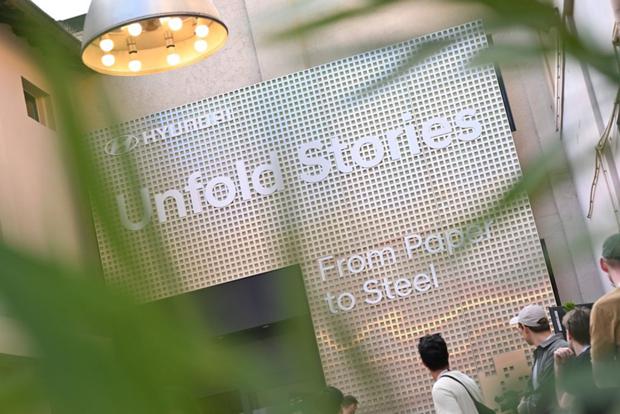
Design as Brand Territory: IONIQ3 goes Milan
Fuorisalone refers to the wave of spontaneous events that began emerging around Milan Design Week in the 1980s, turning palazzos, rooftops and courtyards across the city into satellite venues for the Salone del Mobile, the furniture fair that has been a cornerstone of design since 1961. This year, more than 2,000 brands took part in around 1,000 events, attracting some 500,000 design minded visitors from around the world.
The content of these activations root in design and leans into pop culture, drawing influencers, cameras and drones, and generating millions of impressions. It offers a natural platform for brand narratives.
Brands see it as an opportunity to experiment, have fun and simply be creative, with a refreshing disregard for ROI, what a Campaign article described as a “fairytale land of creativity.” Among the most coveted activations this year were Zara, USM, Moncler, Gucci, IQOS, Thonet and Veuve Clicquot.
MORE DESIGN, LESS POWERTRAIN
Design sits at the core of Hyundai’s brand DNA. With its “Unfold Stories - From Paper to Steel” immersive installation, Hyundai unveiled the IONIQ 3 within the context of Fuorisalone rather than a traditional car show, a statement on design, brand and attitude that paid off.
Hosted at Torneria Tortona, well located within one of the most established Fuorisalone districts, the installation drew around 30,000 visitors. For Laura Rathai, Marketing Director, this was exactly where they wanted the brand to be. “Our designers have enormous degree of freedom and rethink every vehicle from the ground up, inside and out, always with people at the center. We wanted to make this human centric design visible. Milan was the ideal stage for that.”
Hyundai has used Milan Design Week as a stage for its design credentials since 2013, when it sponsored the interactive light installation “Fluidic Sculpture in Motion,” created by its in house Advanced Design Team. The project, which went on to win several awards, was followed in 2015 by “Helio Curve,” developed in collaboration with artist Reuben Margolin and the Hyundai Sound Design Research Lab. Other automotive brands present at Milan Design Week included Cupra, Audi, Lexus, Skoda, Geely and Mini.
Off site formats are also gaining traction at Coachella, where brands take events beyond the festival grounds to strong effect, free from on site constraints while retaining the draw. These experiences feel smaller and more exclusive, often with better perks. They are fully built productions, with strong programming, major sponsors and design choices shaped for social
Mobility
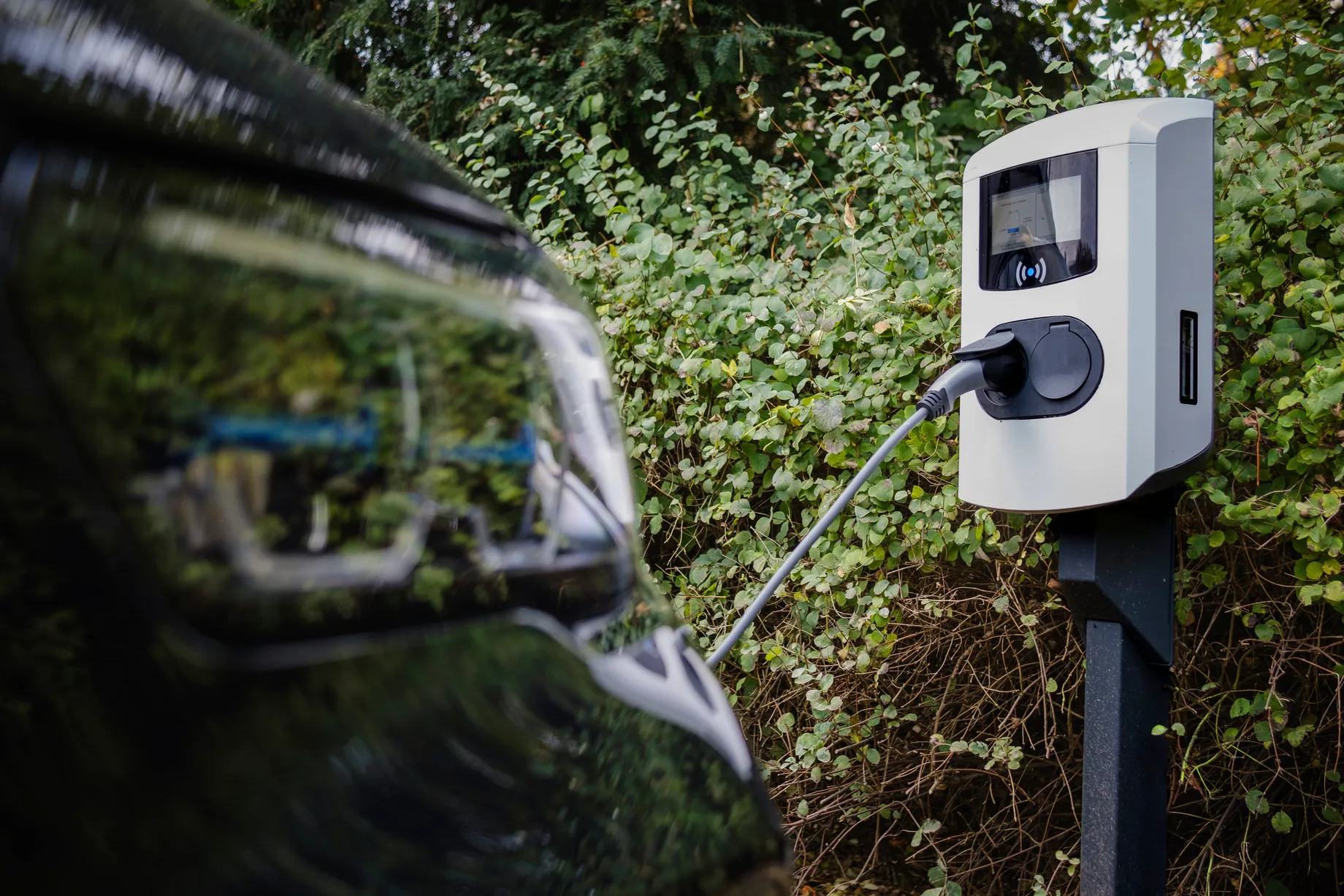
Electric momentum: a market coming into its own
Europe saw a sharp surge in electric vehicle sales in March, with BEV registrations across the EU up nearly 50%. The spike was triggered by geopolitical shock: the Iran war disrupted energy markets and renewed fears of fuel price volatility, reframing electrification as a matter of economic resilience rather than environmental choice.
Germany outpaced the broader trend. BEV registrations rose 66% year on year in March, reaching a 24% share of all registrations. Hybrids remained the top choice at 40%. Strong demand for electric cars lifted the overall market, with new car sales up 16%, the strongest month since June 2024.
The cost advantage of electric driving has never been clearer. According to Verivox, EV operating costs in Germany were up to two thirds lower than those of combustion engines in March, based on home charging. Even fast charging came in below the cost of gasoline and diesel.
PAST THE TIPPING POINT?
But this moment cannot be explained by crisis alone. What sets it apart is its alignment with a deeper shift in consumer sentiment. EU-wide research shows that most citizens now view electric vehicles positively or neutrally, evidence of growing acceptance even as cost and charging access remain unresolved. The crisis is accelerating a trend already underway.
This shift in sentiment comes as global EV numbers reach new scale. In 2025, 80 million EVs were on the road worldwide, 19 million more than the year before, representing growth of 31%. Of these, 44 million, or 55%, are in China, followed by 7 million in the US. Germany at 3.2 million, the UK at 2.8 million and France at 2.5 million round out the top five.
Europe as a whole, with more than 16 million vehicles or 18%, remains ahead of the US and second only to China. By manufacturer, BYD leads with an estimated 15 million EVs on the road, followed by Tesla with 9 million and VW with 5.7 million.
PLAYING CATCH UP
In Germany, VW remains the leading BEV manufacturer, though it is losing market share. Skoda stands out, with sales up 34%. Audi, BMW, Hyundai and Opel also posted strong double-digit gains. Tesla, rebounding after a weak 2025 and driven by heavy discounts, along with Leapmotor and BYD, quadrupled their sales. Against this backdrop, Brussels’ “Made in Europe” push is taking shape. By prioritizing local production and reducing reliance on Chinese suppliers, the EU is reacting to shifts already underway, seeking to regain industrial control at a time when energy security, trade risk and competitiveness have become tightly linked.
Advertising
Juries evolve as award shows cozy up with clients
Jury composition is shifting away from purely agency‑driven roles towards more entrepreneurial, strategic and tech‑oriented profiles. A change long in the making is now accelerating, as awards fight to stay relevant in an evolving landscape. While many welcome the move away from a “creative elite” mindset, others warn that the lines between effectiveness and creativity awards are blurring.
Some of the brands represented at Cannes juries this year include AXA, Meta, Diageo, PepsiCo, Nestlé, Telstro and Safaricom. In addition, CMOs are being given their own summit with the Lions Global CMO Forum, a closed-door event chaired by P&G CMO Marc Pritchard.
Clients also play a bigger role in this year’s revised submission process – a response to the scandal triggered by AI-manipulated case studies last year. Part of the revised rules include a stricter client sign-off: each entry needs to be approved by a CMO or Senior Leader of the commissioning brand. The trend goes beyond Cannes. ADC, long seeking closer ties to the business world, has also rebalanced its juries towards brand managers, aiming to better connect creative output with business realities. The award show is debuting a brand-new category, “Creative Impact”, to better evaluate not only creative quality but also demonstrable economic impact.
MORE DIVERSE?
Cannes is opening its jury seats to new regions. Alongside established markets such as the US, UK and Brazil, there is a growing presence from Africa, the Middle East, Latin America and Asia‑Pacific. The Dominican Republic and Venezuela are represented for the first time.
With these changes, Germany is losing relevance: no Jury President, and jury numbers down from 12 three years ago to six this year. “The composition of this year’s juries shows how creativity is evolving—it is becoming more interconnected, more diverse and more influential in all areas of business,” says Marian Brannelly, Global Director of Awards at The Lions. But the more diversification argument is fragile: Of the six jurors, the only two agency seats both went to Serviceplan.
BURDENSOME APPROVALS
The more active client approval has proved tricky for agencies in its first-year, with the process turning tougher than anticipated for many. Agencies have complained about extensive coordination, sign-off confusion, burdensome fact-checking and diverging priorities which led in some cases to straining client relationships. The pushback highlights how far some agencies had drifted from close brand alignment.
A FALSE DICHOTOMY
Will these changes influence what work gets awarded? Will clients benefit? Will creativity, as we understood it so far, suffer? As creative quality is increasingly framed as the outcome of an ongoing dialogue between brand and creatives, the growing presence of clients on juries appears less like a disruption and more like a logical next step. And if creativity is what ultimately drives the economic impact they seek, that recognition is likely to follow.
Monthly Picks
![[INNOCEAN HQ] April Monthly Picks](https://innocean.eu/wp-content/uploads/2026/05/Monthly-Picks_April.avif)
[INNOCEAN HQ] April Monthly Picks
The Insight Strategy Division at INNOCEAN HQ is excited to share April edition of Monthly Picks. This publication explores three impactful social trends and provides valuable marketing insights.
- Marketing Trend: How Gen Alpha is transforming consumer behavior and experience
- Space EX: Redeveloping space, redesigning experience
- Rising icon: The rise of next fragrance